I’ve always thought of them as those little (or big) situations in time when useful lessons about ‘being in the world’ suddenly reveal themselves ‘in the world’. Life imitating art imitating life imitating on and on – our mental models, if sufficiently malleable, working themselves out in constant flow – always wrong, of course, but sometimes useful – as we attempt to interpret the phenomena before our eyes (all imaginative senses, really), including what makes its way into our conscious experience. Teachable moments.

Believe it or not, that kind of talk is more or less how we normally begin our graduate course in Regenerative Economics and is emblematic of an aspect of our inquiry here at Schumacher College. We describe our course as pluralistic and transdisciplinary. We begin with a deep dive into holistic science, deep observation and phenomenology, then move on to systems, complexity, ecology and deep ecology. We practice interrogating our presuppositions, reflections and observations. A foundational element of our epistemology concerns making sense of our reality as human beings as it plays out in time and space, and in our case, paying special attention to the social, political, economic, cultural, ecological systems near and far, and from multiple perspectives. ‘There are many ways of knowing’, one would hear us say; ‘many paths to many mountaintops’, a favourite metaphor.
Continue reading “Teachable Moments: Crisis and what might be next at Schumacher College “
 I don’t consider myself a consumer. I might have simply borrowed one from
 It’s a precious gift to be alive as a sentient human being whatever the circumstances, my Buddhist friends remind me. Yes, of course, I say. And the global pandemic is awful, causing premature deaths, suffering and loss for survivors, financial disaster for households and business owners. My Buddhist friends also remind me that there has always been suffering. Perhaps, making clear these fundamental truths of the human condition are the first two gifts of this pandemic.
 To state the obvious, political and economic change happens in all kinds of ways including through crisis and calamity. For those of us working for change at local, municipal and regional scales, this is the moment when many of the solutions we’ve been promoting are needed and the conditions for building the foundations for longer term change are favourable. There’s much to explore on this topic, obviously, but let’s just focus on a few points which might inspire immediate action and kick off a continuing conversation in our wider community of changemakers, and especially here in the South West, UK.
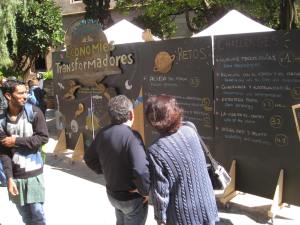 I’ve recently returned from the planning conference for the next World Social Forum (May, 2020 in Barcelona), which will be focused on Transformative Economies (
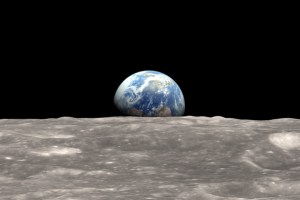 It’s a new year so some resolutions might be in order, yes? This is part of the usual business of celebrating the completion of one solar cycle by promising ourselves to be better somehow in the next. But the dawning of this new year should feel different to all of us. We in the ‘rich countries’ need to rapidly and dramatically transform our societies, reducing our emissions and ecological footprint, while providing livelihoods and wellbeing for all – and defeat fascism in all its permutations, too. Usually, resolutions are personal, but recognising the immensity of the collective challenges we face, I’d like to respectfully suggest a few collective, achievable and, hopefully, useful resolutions for our movement.
  Perhaps we all agree the current economic system is the problem. This is, of course, a generalisation which could be endlessly unpicked and elaborated. But if we’re concerned about global warming, biospheric damage, inequality, etc, the globe-sized elephant in the room, so to speak, is the dominant economic system powered by fossil fuels and predicated on endless consumption and growth. It’s efficiency-oriented and centralising, concentrating ever greater economic and political power in the hands of oligarchs and autocrats, which means change will not come easy.
 Regardless of your vote, your analysis, your personal circumstances, we’ve all got to step back from the anger, demonizing, and fear. Generating this kind of negative energy perpetuates division and is ultimately self harming. What we need are cool heads and compassionate hearts. Above all, we need practical action. Re-read your Macy or Camus, if necessary, but we must summon the courage to face the reality of our situation in this society and our role in it. All you systems thinkers, students of complexity, advocates of holistic solutions — isn’t this the moment we’ve been training for?
 Enterprising Ecosystems